
Baby First Foods Pakistan: What Desi Parents Actually Feed
It's 2 AM. Your baby just hit six months. The pediatrician said "start solids" at last month's checkup, and now you're staring at the ceiling wondering — do I begin with moong daal ka pani? Mashed kela? The Cerelac tin my mother-in-law has already placed prominently on the kitchen counter?
Every family has its own theory. Nani says rice water. Dadi says mashed aloo. Your neighbour's daughter-in-law who did a nutrition diploma says puréed sweet potato. And the internet gives you about 47 different answers. Here's the thing though — Pakistani kitchens are actually incredibly well-stocked for starting solids. You just need to know what to reach for.
When Should You Actually Start? The Real Answer
Six months. That's the WHO recommendation, backed by solid research — not just what worked for your phuppo's kids in the 90s. Earlier than that, a baby's digestive system simply isn't ready. Too late, and you risk iron deficiency because breast milk alone doesn't carry enough iron past six months.
Before you begin, watch for these signs:
- Can hold their head up steadily without support
- Can sit upright with a little help
- Shows interest in what you're eating (the grabby hands aimed at your roti are a strong hint)
- The tongue-thrust reflex has faded — they stop automatically pushing things back out
If your baby hits six months but isn't showing all these signs yet, have a conversation with your pediatrician first. Don't rush it on anyone's timeline but your baby's.
Best Baby First Foods Pakistan — Your Desi Kitchen Already Has Most of This
Something worth saying clearly: when it comes to the best baby first foods Pakistan families can prepare, we're genuinely ahead of the curve. Our everyday sabzi mandi staples — fresh dahi, soft-cooked daal, ripe kela — are globally recognized weaning foods. Forget imported jars. Your kitchen is already stocked, and probably has been for years.
1. Mashed Banana (کیلا)
Zero cooking. Ripe banana mashed until smooth, that's it. Soft, naturally sweet, easy on tiny stomachs, packed with potassium. Banana is consistently one of the top-ordered fresh fruits among FreshBox's 4,813+ customers across Islamabad and Rawalpindi. Once you've had a truly ripe, fresh banana versus the sad half-brown ones sitting at the corner shop all week — you'll understand why quality matters even for something this simple.
2. Moong Daal (Broth First, Then Mashed)
Your nani was right about this one. Start with just the thin water from boiled moong daal — no tarka, no salt, no masala at all. As baby adjusts over a week, move to actual mashed moong daal. Excellent source of protein and iron, both critical after six months when breast milk alone stops being enough.
Boring? Extremely. Does a six-month-old care? Absolutely not. (Trust me on this — my niece ate plain moong daal water for two weeks like it was the best thing she'd ever tasted. Babies are refreshingly easy to please at this stage.)
3. Mashed Red Potato (سرخ آلو)
Steam a small potato until completely soft, mash smooth, thin it with a little breast milk or boiled water. Potato Red (سرخ آلو) is one of the consistently top-selling vegetables on FreshBox — across 19,052+ delivered orders, aloo keeps showing up on family grocery lists. There's a reason: it's filling, easy to digest, and takes on whatever texture you need.
4. Soft Cooked Tomato (ٹماٹر)
Tomato (ٹماٹر) is literally the single most ordered item across FreshBox's entire catalogue. Cook it first, peel the skin, blend or mash smooth. It's rich in Vitamin C, which actually boosts iron absorption from the daal you're also giving — a genuinely smart combination that our grandmothers stumbled onto before nutritionists had a name for it.
Always cooked first. Raw tomato at this age is harder to digest and a texture risk.
5. Simple Khichdi
Once your baby has been eating solids for a few weeks and you're ready to combine foods, khichdi is the move. Rice and moong daal cooked together until almost paste-like — no masala, minimal salt if any. This has been desi baby food for centuries because it genuinely works: nutritionally complete, incredibly easy to swallow. Personal recommendation: add just a small amount of desi ghee for calories and fat-soluble vitamins. Your nani did this for a reason, and that reason holds up.
6. Fresh Yogurt (دہی)
After six months, plain whole-milk dahi is excellent. Probiotic, calcium-rich, naturally cooling. Fresh Yogurt 1Kg (دہی) is among the most consistently ordered dairy items by FreshBox families in the twin cities — and the quality difference between fresh dahi and the stabiliser-loaded cartons at some superstores is very real, speaking from experience.
Skip the flavoured versions. Plain, full-fat, fresh dahi only. No sugar. And absolutely no honey — more on that below.
7. Mashed Sweet Potato (شکرقندی)
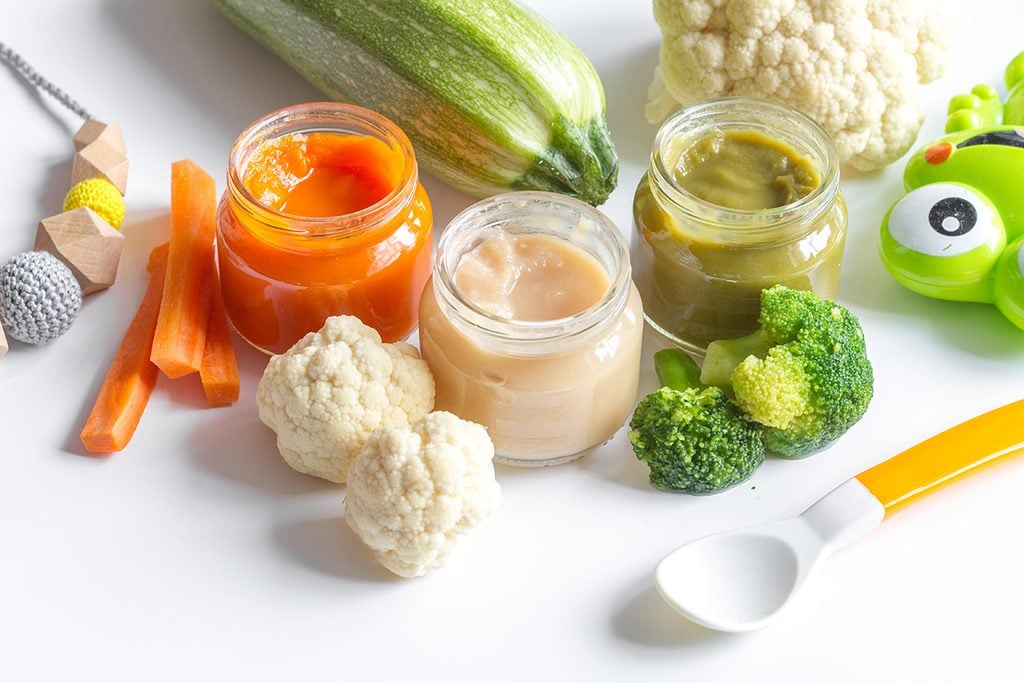
Naturally sweet without adding anything. Steam and mash. High in beta-carotene and Vitamin A. Babies tend to take to it quickly — probably because it tastes like something a human being would actually enjoy eating, unlike the plain daal phase. Great once you're past the very first introductory foods and looking to add some variety.
8. Soft Cooked Vegetables
Cooked carrot, soft-cooked cucumber (کھیرا), cooked palak — all good a few weeks in. The rule is always cooked until completely soft. Raw vegetables are a choking risk and harder to digest at this stage. Coriander (دھنیا) and mint (پودینا) — both in every Pakistani fridge, always — can be mixed into purées in small amounts a bit later to introduce flavour without harshness.
Foods to Avoid Before 12 Months — Non-Negotiable
This part matters. Please don't skip it:
- Honey — risk of infant botulism, full stop. Not even a tiny taste. Not in tea, not mixed in dahi, nothing.
- Cow's milk as a main drink — breast milk or formula stays primary until 12 months
- Added salt and sugar — immature kidneys cannot process them properly
- Whole nuts or large firm pieces — choking hazard
- Whole grapes, large fruit pieces — always mash or cut tiny
- Spicy food — not yet. Build toward it much later.
- Packaged snacks and processed food — not at this stage
Raw egg white carries allergy risk under 12 months. Cooked egg yolk from around 8-9 months is generally fine and a solid iron source — but check with your pediatrician first before introducing eggs. Don't take shortcuts on this one.
The Real Islamabad Parent Problem: Fresh Ingredients With a Newborn at Home
Okay. You know what to feed. Now the practical part.
You have a six-month-old who naps for exactly 40 minutes. Load shedding just hit. Your husband is in a meeting. You need fresh tomatoes, ripe bananas, red potatoes, and a kilo of dahi for this week's baby food prep — and the thought of bundling the baby into the car and navigating to F-10 Markaz feels genuinely impossible right now. This is a Tuesday. This is just life with a new baby in Islamabad.
FreshBox delivers fresh sabzi, fruits, dahi, and 2,025+ grocery products across Islamabad (F-6 to F-11, G-9 to G-13, E-11, I-8, I-10) and Rawalpindi including DHA, Bahria Town, and PWD. With a 4.6/5 average rating from families who've placed over 19,052 orders, the quality holds up consistently. Order through freshbox.pk or WhatsApp +923376226666 — sometimes the second option is just easier when you're one-handed and the baby is on the other arm.
When sourcing baby first foods Pakistan families are preparing fresh at home, quality matters more than usual. You're not cooking a biryani where a slightly-past-its-best tomato is forgivable. You're making food for someone whose immune system is still developing. Fresh really does mean something here.
A Simple First-Week Feeding Schedule
Keep it very simple in the beginning:
- Day 1–3: One single food only. Start with one tablespoon. Watch carefully for reactions.
- Day 4–7: Same food. Increase to 2–3 tablespoons if no reaction appeared.
- Week 2: Introduce a second food, same 3-day wait rule.
- Week 3 onwards: Begin mixing foods they've already tolerated well.
The three-day wait rule exists so you can identify sensitivities clearly. Don't rush it. Breast milk or formula is still the primary nutrition source at this stage — solids right now are practice. Introducing taste, texture, and the concept of eating. Nothing more yet.
Reactions to Watch For
Rash around the mouth or on the body, unusual vomiting, diarrhea that wasn't there before, swelling, or extreme fussiness after eating. Most reactions are mild. Some aren't. When in doubt, call your doctor. A false alarm costs you an hour. A missed reaction can cost much more.
Purées vs Baby-Led Weaning: What Actually Works Here?
Baby-led weaning (BLW) — skipping purées and offering soft finger foods from six months — is getting a lot of attention in Pakistani parenting circles right now. It absolutely works. But it requires understanding the difference between gagging (normal) and choking (emergency), staying right there during every meal, and a certain amount of nerve on the parent's part.
Real talk: most Pakistani families end up doing a natural mix. Smooth purées and mashes for the first six to eight weeks, then gradually introducing soft lumps and small finger pieces as the baby shows readiness. That's a completely valid approach and there's nothing outdated about it. Feed your baby what you can prepare consistently and safely. That's the right method — not whatever's trending on Instagram parenting accounts right now.
Your Desi Kitchen Is More Ready Than You Think
The ripe kela on your counter. The moong daal in your pantry. The fresh dahi in your fridge. The tomatoes and red potatoes that came with your last grocery order. The right baby first foods Pakistan families have always relied on were never exotic or expensive — they were already there, on your kharchi list every week, sitting quietly in the sabzi basket.
Take a breath. Start with one food. Watch your baby discover that eating is actually interesting. And on the days when fresh grocery shopping isn't happening — which, with a six-month-old, is most days — you know where to order.
This article is for general information only and is not a substitute for professional medical advice. Always consult a qualified healthcare provider about your individual health needs.
Ready to start eating healthy?
Browse our selection of fresh produce and groceries, delivered to your doorstep in minutes.
Start Shopping
Written by
Faisal ShehzadFaisal Shehzad writes practical, locally-grounded guides on groceries, seasonal produce, nutrition and home cooking for households across Islamabad and Rawalpindi.
View all articles →