
Best Cooking Oil Pakistan: Desi Ghee vs Canola vs Vanaspati 2026
The Great Pakistani Oil Debate Nobody Warned You About
Ask your ammi which cooking oil she uses. Then ask your phupho. Then your neighbour. You'll get three completely different answers, delivered with full confidence and absolutely no room for discussion. Desi ghee lovers will tell you canola is bland, tasteless, bilkul bے rooh. Canola users say ghee is too heavy for daily cooking. And somewhere in the middle, there's still a whole generation cooking with vanaspati because yahi tou hamesha se use hota tha — and frankly, nobody has convinced them otherwise yet.
So what actually is the best cooking oil Pakistan families are reaching for in 2026? Real talk: there's no single answer. But there's definitely a right answer for your specific kitchen, your cooking style, and your budget — and most people are already halfway there without realising it.
Desi Ghee: The Undisputed King — With Conditions
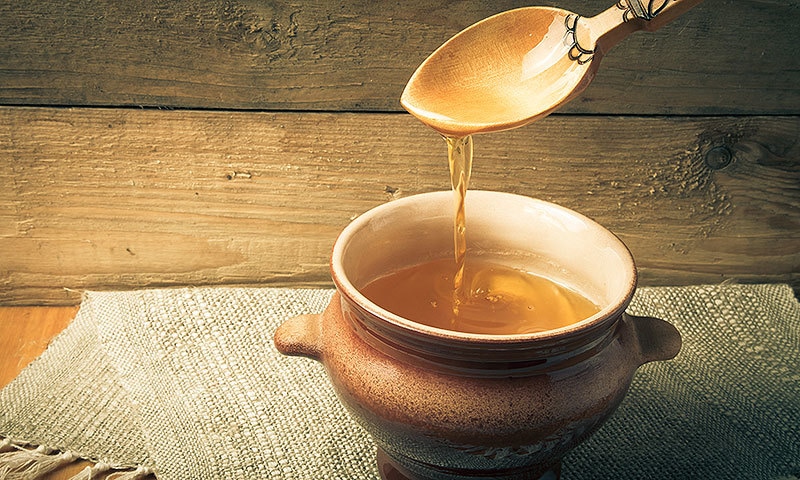
If you've ever had daal made with proper hand-churned desi ghee — not the tinned stuff, actual clarified butter someone's nani made at home — you understand why it holds a permanent place in every Pakistani kitchen. That nutty, rich aroma when a tablespoon hits a hot tawa? Nothing compares. Nothing.
Desi ghee has a smoke point of around 250°C, which makes it excellent for tarka, roasting, and even high-heat frying. It's rich in fat-soluble vitamins A, D, E, and K. The butyric acid in ghee supports gut health. These aren't just old wives' tales anymore — nutritional science has been quietly catching up to what our dadis always knew. (My own nani used to say ghee is medicine. Turns out she wasn't entirely wrong.)
Quality matters enormously here, though. Branded ghee from a supermarket shelf and hand-churned desi ghee from a local dairy are not the same product. Not even close. In Islamabad in 2026, expect to pay anywhere from Rs. 2,800 to Rs. 6,500+ per kg for the real deal. That's not a typo. The good doodh walas in G-9 and I-10 produce exceptional ghee, but you have to know where to look — and you have to build that relationship slowly.
And yes — ghee is calorie-dense. About 120 calories per tablespoon. In moderate amounts, absolutely fine. For deep-frying a full handi of karahi? That's when people start quietly questioning their life choices mid-cook.
Best Used For
- Daal tarka — the aroma is non-negotiable
- Biryani (a spoonful added during the final dum)
- Paratha and roti finishing
- Halwa, kheer, and mithai
- Any dish where that asli desi depth of flavour is the whole point
Canola Oil: The Practical Choice That Won Over Most Pakistani Kitchens
Walk into any middle-class household in F-10, G-11, or Bahria Town right now and there's a strong chance you'll find canola on the counter. It quietly became the default oil for daily cooking, and for good reason. Of all the options on the market today, canola is probably the best cooking oil Pakistan's urban middle class has collectively settled on.
Canola has one of the lowest saturated fat contents of any common cooking oil — around 7%. It's high in monounsaturated fats, has a neutral taste that doesn't fight with your spices, and a smoke point of around 200–230°C which handles most Pakistani cooking methods comfortably. Karahi, qorma, everyday sabzi, bhuna gosht — canola handles all of it without drama. It's also significantly cheaper than desi ghee and available everywhere from Itwar Bazaar to your nearest kiryana store.
Here's a small trick worth knowing: if you're using canola for a tarka and want that ghee-like depth, add a half teaspoon of actual desi ghee at the very end, after the oil-based tarka is done. You get the flavour and aroma of ghee without burning through your expensive jar in a week. Trust me on this — it's the kind of thing experienced home cooks figured out years ago and never bothered telling anyone.
Best Used For
- Daily vegetables and sabzi
- Frying — pakora, samosa, aloo tikki
- Karahi and everyday curries
- Baking and desserts where a neutral flavour is needed
Vanaspati: We Need to Have an Honest Conversation
Vanaspati ghee — called "dalda" in most Pakistani homes regardless of actual brand — is hydrogenated vegetable oil. It became ubiquitous because it was cheap, had a long shelf life, and gave parathas and samosa pastry that specific crispy, flaky texture that other oils struggle to replicate. Your local halwai still uses it. Probably always will, because customers keep ordering from him and nobody's complaining yet.
But here's what needs to be said clearly: vanaspati contains trans fats. And trans fats are genuinely harmful. The WHO has been pushing for the global elimination of industrial trans fats since 2018, linking them to elevated LDL cholesterol, cardiovascular disease, and systemic inflammation. Pakistan's regulatory environment around trans fat labelling is still catching up, which means you sometimes don't know exactly what you're getting when you buy an unlabelled block from a general store.
I'm not going to pretend vanaspati doesn't produce the most reliably flaky samosa shell or the crispiest paratha. For specific texture-critical applications it's technically hard to beat. But for everyday cooking? Better options exist today at similar or only slightly higher cost. Reduce it to occasional, special-use cases at most — or phase it out altogether if you can manage it.
What About Olive Oil, Sunflower, and Everything Else?
Olive oil is excellent — for salads, pastas, and light sautéing at lower temperatures. But it has a lower smoke point than canola (around 190°C for extra virgin), a strong flavour that doesn't always pair well with Pakistani spicing, and it's genuinely expensive for daily use. Using premium imported olive oil for your gosht karahi is a waste of both the oil and your money. Spend it on better meat instead.
Sunflower oil sits in the middle ground — decent smoke point, relatively neutral taste, moderately priced. Fine for frying. Nothing particularly exciting on the health front either.
Rice bran oil deserves a mention — high smoke point (around 254°C), a good fatty acid profile, very neutral taste. Still not mainstream here but increasingly available in larger supermarkets and online. Worth trying if you come across it, especially if you do a lot of high-heat cooking.
What Pakistani Families Are Actually Doing in 2026
Here's what most home cooks in Islamabad will tell you if you actually ask them: nobody is using one oil exclusively. The best cooking oil Pakistan-wide isn't a single product — it's a combination strategy. The smart approach — and honestly the most common one now — is using the right oil for the right job.
Canola or sunflower for daily cooking. A small jar of desi ghee reserved for tarka finishing and special-occasion dishes. Maybe some butter for baking. Vanaspati quietly dropped from the rotation, or kept around only for that one auntie's samosa recipe she absolutely refuses to update (speaking from experience — some battles aren't worth having).
This is a sensible setup. You get the health profile of lighter oils for everyday use, the flavour and nutritional value of ghee where it actually counts, and you're not spending a fortune every month on cooking costs. Load shedding is already expensive enough — no need to add to the burden with premium ghee in every single dish when canola does the job just as well for a regular weeknight sabzi.
Fresh Produce Matters as Much as the Oil You Cook It In
The best cooking oil in Pakistan won't save a dish made with low-quality vegetables. And in Islamabad and Rawalpindi, fresh produce quality varies enormously depending on where you're sourcing it. The difference between a tomato bought fresh from a trusted source and something that sat in the back of a truck for three days is immediately obvious once it hits the tawa — the colour, the moisture, the way it cooks down. You can't hide stale produce behind good technique.
The most ordered items on FreshBox right now tell their own story: tomatoes, onions, fresh coriander (دھنیا), pudina bundles, cucumber, and 1kg fresh dahi — the exact ingredients that anchor Pakistani home cooking regardless of which oil you're using. With over 19,082 orders delivered to 4,828+ customers across Islamabad and Rawalpindi, and a customer rating sitting at 4.6 out of 5, freshbox.pk does same-day delivery across F-6 to F-11, G-9 to G-13, E-11, I-8, I-10, DHA, Bahria Town, and PWD. No traffic, no parking nightmare near F-10 Markaz, no haggling at the sabzi mandi on a busy Wednesday evening when you just want to get home and cook.
Fresh dahi on the side of a paratha finished with even a small amount of proper desi ghee — that's a combination that needs no defending. Just make sure both are actually fresh. The dahi especially. There's no recovering from that mistake.
The Practical 2026 Answer
For the best cooking oil Pakistan families can actually stick to — one that balances health, flavour, and cost in 2026: use canola as your everyday workhorse, reserve desi ghee for tarka finishing and special-occasion dishes, and phase out vanaspati wherever you can manage it. That's the answer that makes both nutritional and financial sense for most families — not complicated, not expensive, just practical.
Your food will taste better. Your long-term health outcomes will be better. And on the days you do use proper desi ghee for a daal or a biryani dum, the smell alone will make the whole house feel like something worth sitting down for.
This article is for general information only and is not a substitute for professional medical advice. Always consult a qualified healthcare provider about your individual health needs.
Ready to start eating healthy?
Browse our selection of fresh produce and groceries, delivered to your doorstep in minutes.
Start Shopping
Written by
Faisal ShehzadFaisal Shehzad writes practical, locally-grounded guides on groceries, seasonal produce, nutrition and home cooking for households across Islamabad and Rawalpindi.
View all articles →