
Regional Pakistani Dishes You Should Cook at Home: A Grocery Guide to Every Regional Cuisine
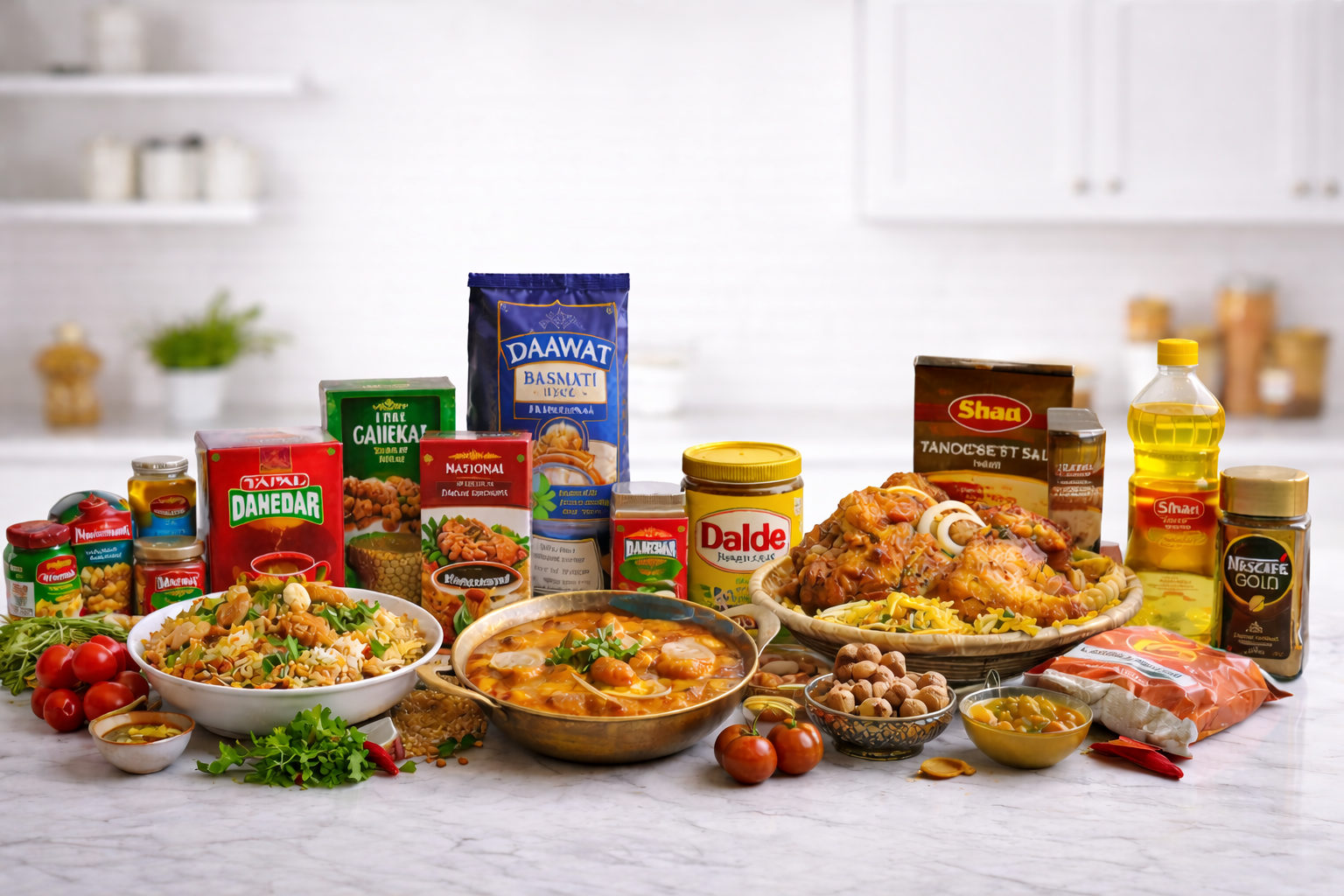
Ever tried to replicate that mind-blowing biryani from your family's hometown, only to end up with something that tastes like it was cooked by someone who's never actually tasted food? Yeah. The problem isn't you — it's that regional Pakistani dishes each have their own personality, their own spice ratios, their own technique. You can't just follow a generic recipe and expect magic. Every province, every region has its own take on what matters most: whether it's fragrant rice, tender meat, or just honest bread and ghee.
Most of us grow up eating one regional style and assume that's just "Pakistani food." But when you actually start exploring regional Pakistani dishes from across the country — from the mountains of the north to the deserts of Balochistan — you realize how wildly different they are. That's the real food story here.
The Northern Mountains: Where Meat Rules Everything
Head north and you'll notice something immediately: meat is the star. Gilgit-Baltistan, Khyber Pakhtunkhwa — these regions didn't develop complicated rice traditions because they didn't need to. They perfected what they had: meat cooked with minimal but brilliant spicing.
Mutton here is treated with respect. It's slow-cooked, sometimes for hours, in yogurt-based gravies that are nothing like the heavy tomato sauces you might be used to. Rista from Kashmir and Gilgit? That's meat so tender it falls apart without a knife, poached in a yogurt gravy that's almost delicate. The magic is the restraint — these dishes don't assault your palate with ten spices competing for attention. It's usually cardamom, cinnamon, maybe some mild chili, and that's your masterpiece.
Plow meat — slow-cooked meat with root vegetables — is another beast entirely. It's peasant food done perfectly. Meat, potatoes, carrots, onions, minimal spicing. In Islamabad, people from the north often complain that fancy restaurants overcomplicate it. They're right.
And then there's the bread culture. Chapati, naan, the flatbreads change from village to village. But up north, they're more likely to be thicker, chewier, cooked on cast iron or directly on coals.
Punjab: The Bread, The Meat, The Spice
Punjab is chaos and comfort in equal measure, and the food reflects that. Nihari is Punjab's love language — meat stewed overnight in a gravy thick enough to cling to your bread like it's got personal business with it. But here's what most people get wrong: nihari isn't the same in Lahore as it is in Rawalpindi. Ask five families how they make it and you'll get five different stories.
The common thread? Slow cooking, plenty of ghee, and spices that have time to bloom. Ginger-garlic paste, cinnamon, cloves, cardamom — they've got time to become friends with each other. And that gravy? It needs to be thick enough to make you work a little while you eat, but loose enough that you can dip your bread. The texture is everything.
Biryani. Okay, we need to talk about biryani because every Punjabi household argues about theirs. Some families are rice-forward, others are meat-forward. Lucknowi-style, Karachi-style, Islamabad-style — regional Pakistani dishes like biryani vary so much that you might as well consider them different dishes entirely. The constant is basmati rice, ghee, and meat that's been marinating.
Haleem is another Punjabi tradition that requires patience. Meat, lentils, and wheat all break down together over eight hours to become something almost porridge-like. It shouldn't work. It does.
Sindh and Balochistan: The Desert Meets the Sea
Sindhi cuisine is underrated everywhere except Sindh, honestly. The food here is simpler in appearance but complex in execution. Sindhi biryani looks different — it's usually spicier, the meat more prominent, less about the rice. Thal peeth, a meat and flour dish, tastes like poverty made gourmet. Korma here is often made with dried chili and yogurt, creating this tangy-spicy balance that's addictive.
Balochistan's food philosophy is "make it count." Resources are scarce, so nothing is wasted. Saag and makki, greens and meat, is fundamental. Lobia in a meat-based gravy. These aren't frilly dishes — they're honest cooking.
Khaddi kabab, a Baloch specialty, is meat mixed with spices and cooked in a specific way that's almost grilled-stewed. It's got texture and char and none of the pretension you might find in fancier restaurants.
What You Actually Need in Your Kitchen
Here's the insider tip nobody tells you: most regional Pakistani dishes rely on the same spice foundation. You don't need a hundred things. You need good ghee, fresh ginger-garlic, cinnamon, cardamom, cloves, bay leaves, dried chili, and yogurt. That's your base.
The difference between an okay biryani and a transcendent one isn't a secret spice — it's ghee and time. Real ghee, the kind that actually smells like cooked milk. And time, because rushed meat doesn't have a prayer.
Rice matters too. Basmati is non-negotiable for certain regional Pakistani dishes. Don't cheap out on this. Good basmati has length and doesn't break when you're cooking. Store-brand is sometimes genuinely terrible, and your entire dish suffers.
Yogurt, when you're using it, should be full-fat and thick. Watered-down yogurt creates watered-down gravies. That's not sophisticated cooking, that's just sad.
The Meat Question
Look, most regional Pakistani dishes are meat-heavy because, historically, vegetables were seasonal and meat could be preserved. Your meat choice matters. Mutton for slow-cooked curries, chicken for faster preparations, beef for depth. The marbling in the meat, the cut itself — these change everything.
And before you cook anything, that meat needs time to marry the spices and yogurt. Marinating overnight isn't overkill. It's the minimum.
Making It Real
The hardest part about cooking these dishes at home isn't the technique. It's sourcing decent ingredients. Finding yogurt that's actually thick, ghee that actually tastes like ghee, meat from somewhere you trust — these are the real obstacles.
You can get quality ingredients for regional Pakistani dishes delivered through FreshBox, which takes one obstacle out of the equation. Then the rest is just showing up and doing the work.
The Real Work
Regional Pakistani dishes aren't intimidating once you accept that they're not trying to be fancy. They're trying to be honest — honest flavors, honest cooking, honest time. Cook the food your grandmother made. Or steal someone else's grandmother's recipe. Either way, you're learning a piece of Pakistan.
Ready to start eating healthy?
Browse our selection of fresh produce and groceries, delivered to your doorstep in minutes.
Start Shopping
Written by
Faisal ShehzadFaisal Shehzad writes practical, locally-grounded guides on groceries, seasonal produce, nutrition and home cooking for households across Islamabad and Rawalpindi.
View all articles →