
Jaggery vs Sugar This Winter: Worth the Swap or Not?
Every winter, my mother does the same thing. The second the air turns sharp in Rawalpindi, she digs out the jaggery tin and starts grumbling about the white sugar we bought in summer. Honestly? She's not always right, but she's onto something. She also swears it cures sore throats, and I'm not going to argue, because a warm drink with anything in it helps. Trust me on that one.
So is the switch worth it? Sometimes. The longer answer is what this post is about. The jaggery vs sugar debate gets messy fast, mostly because people repeat things they heard from an uncle at a wedding. I'll sort through it properly.
What jaggery actually is
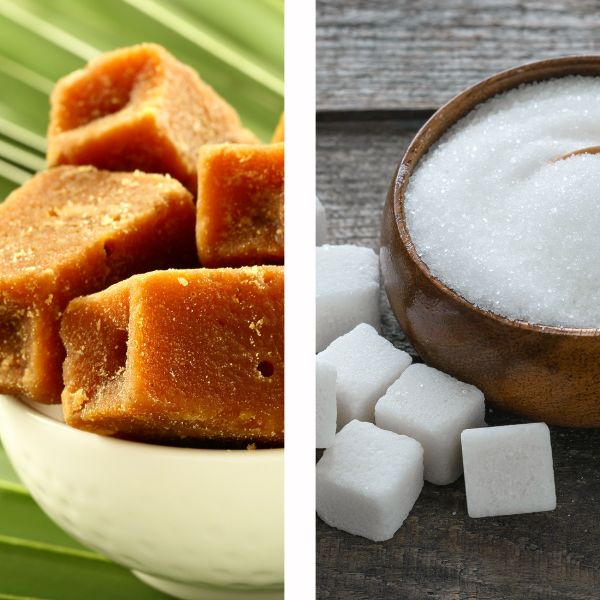
Jaggery is unrefined sugar made by boiling sugarcane juice down until it sets into a block. No centrifuge, no bleaching, no fancy crystals. That's the whole trick. The juice never gets stripped down to pure sucrose, so a bit of the molasses, iron, potassium, and magnesium from the cane stays behind.
White sugar takes the opposite route. The juice gets clarified, filtered, and spun until what's left is almost pure sucrose. Bright, clean, very efficient. It's also nutritionally empty, which is basically the whole argument.
The nutrition myth you can stop repeating
Here's the thing: jaggery is not a health food. I know, I know. Your aunt in Satellite Town swears by it, and half the internet says it's packed with minerals. The honest math is less exciting. Jaggery is still mostly sucrose, roughly 65 to 85 percent depending on how it's made, and the mineral content is small. You'd have to eat a truckload to get meaningful iron.
And the blood sugar story is not what people think. Jaggery doesn't slow your glucose spike the way some blogs promise. Its glycemic index sits in the same ballpark as white sugar, sometimes higher. If you're diabetic or watching your numbers, jaggery is not a loophole.
Taste and texture: where jaggery wins
Now the part I actually care about. Jaggery tastes like caramel that went to university. It's earthy, a little smoky, with a depth white sugar simply can't fake. Stir it into hot milk tea on a cold night during load shedding and you'll get why people here have been doing this forever.
Jaggery is wetter and less predictable than sugar, though. Crystal size varies, moisture varies, and the flavour shifts from batch to batch. That's great for a sticky carrot dessert or a spiced cake with some character. It's a pain for a delicate sponge that needs exact measurements.
Tea: the easy way in
If you're new to this, start with tea. Brew your Tapal Danedar as usual, grate a small amount of jaggery, and stir it in while the milk is still hot. Taste before adding more. It dissolves faster than you'd expect, and the colour turns a warm amber. Don't keep it at a hard boil after adding, or it can turn grainy.
Baking with jaggery
If you're going to try it in baking, here's my rule. Swap by weight, roughly one to one, then cut back the other liquid a little, maybe a tablespoon or two per cup of jaggery. It browns faster, so drop your oven temperature slightly and keep an eye on it. Expect a denser crumb and a deeper colour.
Expect it to be a bit of a mess the first time too. Mine sank in the middle, and I blamed the oven for a week.
Buying it without getting burned
Raja Bazaar in Rawalpindi has more jaggery stalls than you can count, and the better sellers will let you break off a piece and smell it. In Islamabad, the vendors around F-10 Markaz are a decent bet if you go early, before the crowds turn every lane into a parking problem.
Here's the insider tip I wish someone had given me years ago. Really bright, uniform, almost-yellow jaggery is suspicious. Some sellers bleach it, and you don't want that in your tea. Go for darker, slightly uneven blocks with a deep molasses smell. They'll look rough. That's the point.
Storage is simpler. Keep it dry and skip the fridge, which only adds moisture. An airtight jar in a cool cupboard does the job. Power cuts are a fact of life here, but a jar doesn't care.
The price and the hassle
Jaggery usually costs more per kilo than white sugar, and the good dark blocks cost more than the bright ones. Cost is a big part of the jaggery vs sugar question too. Prices swing with the cane harvest and the weather, so I won't quote numbers that'll be wrong by March. What I can tell you is that you'll probably use less of it. It's strong enough that a small piece goes a long way.
The hassle is real too. You'll deal with lumps, you'll chip blocks with a knife, and you'll need to grate or crumble it before cooking. Honestly, that's half the charm for me. Grating it in the kitchen while the pressure cooker whistles is my favourite part.
Jaggery vs sugar: which one wins this winter?
My take on jaggery vs sugar: use jaggery when the flavour is the point. Think tea, a spiced winter dessert, a caramel sauce, or those nutty winter bars your grandmother made every December. Use white sugar when you need precision, like a light sponge, meringue, or anything where texture is the whole game.
Don't make your jaggery vs sugar call based on what a neighbour says about health. It isn't healthier, not in any way that changes your daily intake. Ever noticed how the sweets your grandmother made always tasted deeper? That's jaggery doing its thing, and that's reason enough to keep a tin in the cupboard.
Try it once this season.
If you want to skip the stall-hopping and have good jaggery delivered to your door, you can order it on FreshBox. Start with one block, see how your tea tastes, and decide for yourself.
Ready to start eating healthy?
Browse our selection of fresh produce and groceries, delivered to your doorstep in minutes.
Start Shopping